The Need For Permanent Support
I’ve found that people tend to receive the most support for their grief within the days to weeks after someone dies. This is when people are most likely to offer condolences, physically show up, and offer meals.

I’ve found that people tend to receive the most support for their grief within the days to weeks after someone dies. This is when people are most likely to offer condolences, physically show up, and offer meals.
To me, the holidays are all about spending time with my loved ones and giving back to my community and those who mean the most to me. That becomes a little harder when one of the most important people in your life dies.

I’ve lost count of the number of times someone has told me I’m “mature for my age.” At the time, I thought I was supposed to take that as a compliment and embrace it. Looking back, I realize that I had no idea just how young I really was.
Growing up, I found great comfort and happiness in making music. Ever since my dad died, I’ve been fighting to get that back. At my high school, I took part in our annual Battle of the Bands between the students and teachers.

When it comes to grief, I’ve always struggled with finding the right words. It doesn’t feel like there’s anything I could say that would fully explain the complexities of what it means to grieve a loved one. The unimaginable pain.
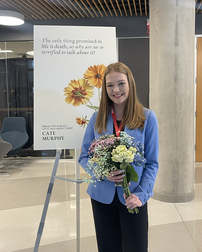
Cate Murphy is a 23-year-old advocate for grieving young people. In July 2016, her father Jason was diagnosed with stage 4 esophageal cancer, and after a courageous fight, he died in March 2017.
Searching for words of comfort to offer a grieving person is often harder than one would expect. If you ask anyone who has grieved before, odds are they will probably tell you that the default condolences are actually some of the most robotic sounding and least comforting words to hear during times of pain and struggle.